
 English


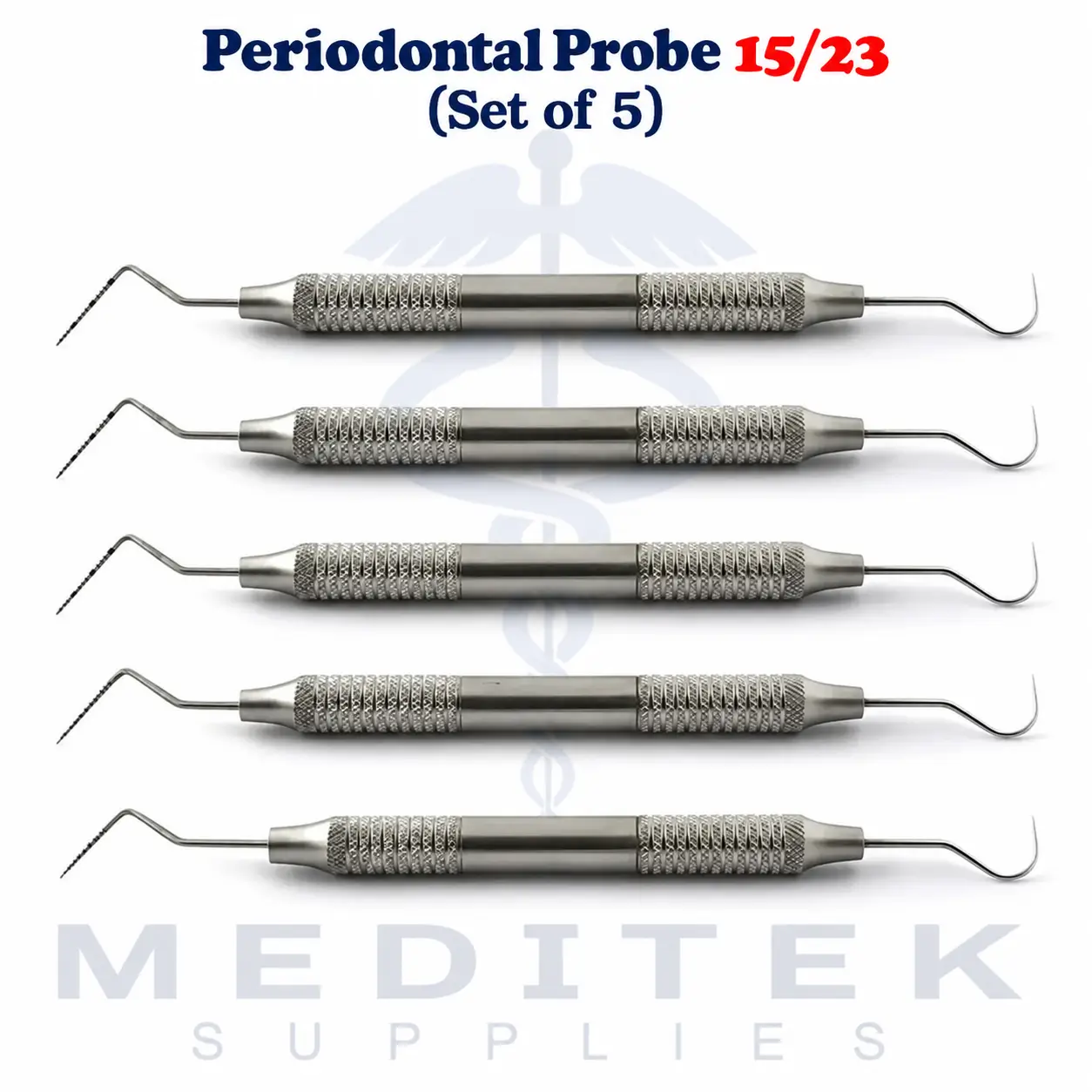
5PCS UNC 15/23 Color-Coded Periodontal Probe Set – Ergonomic Hollow Handle Kit
$54.99
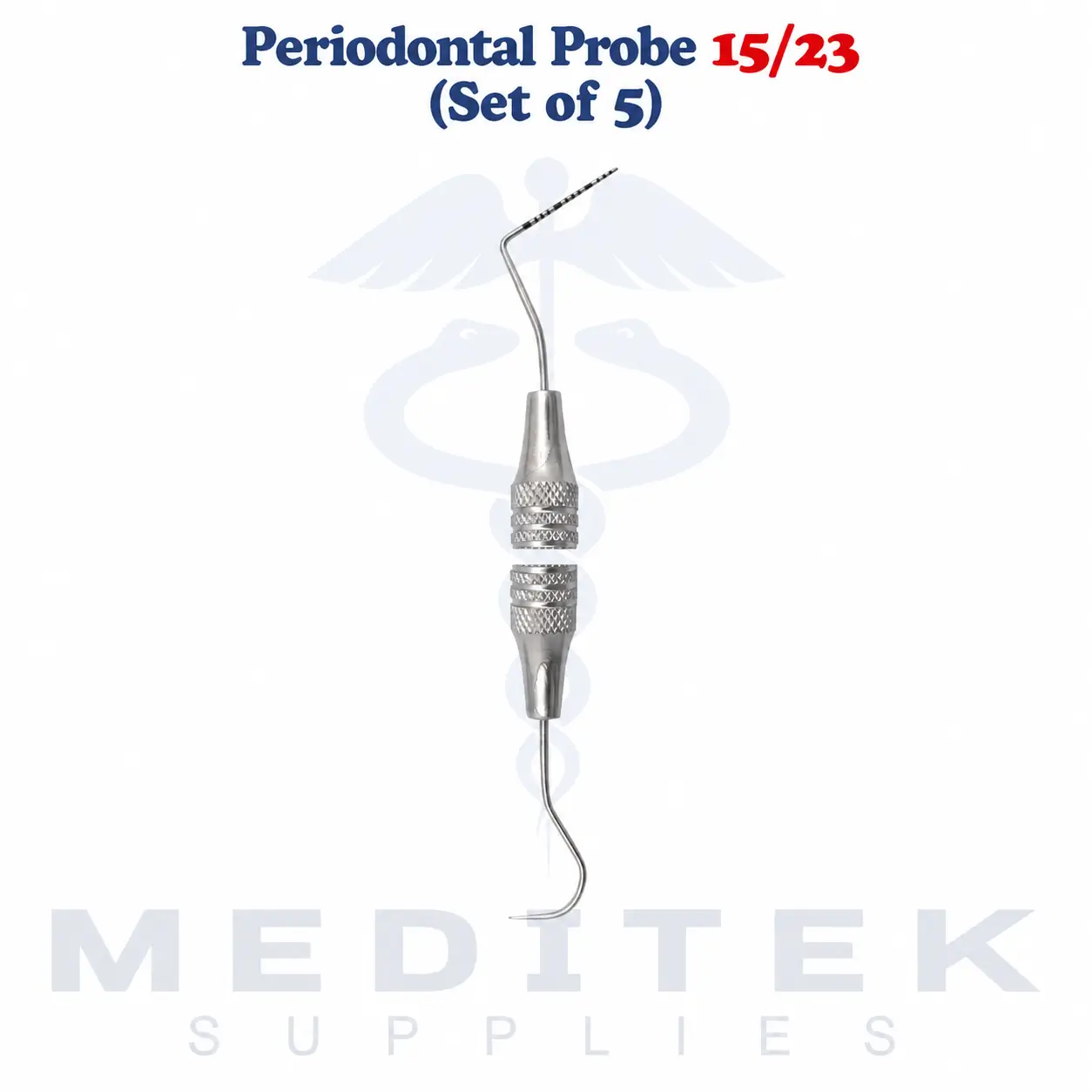
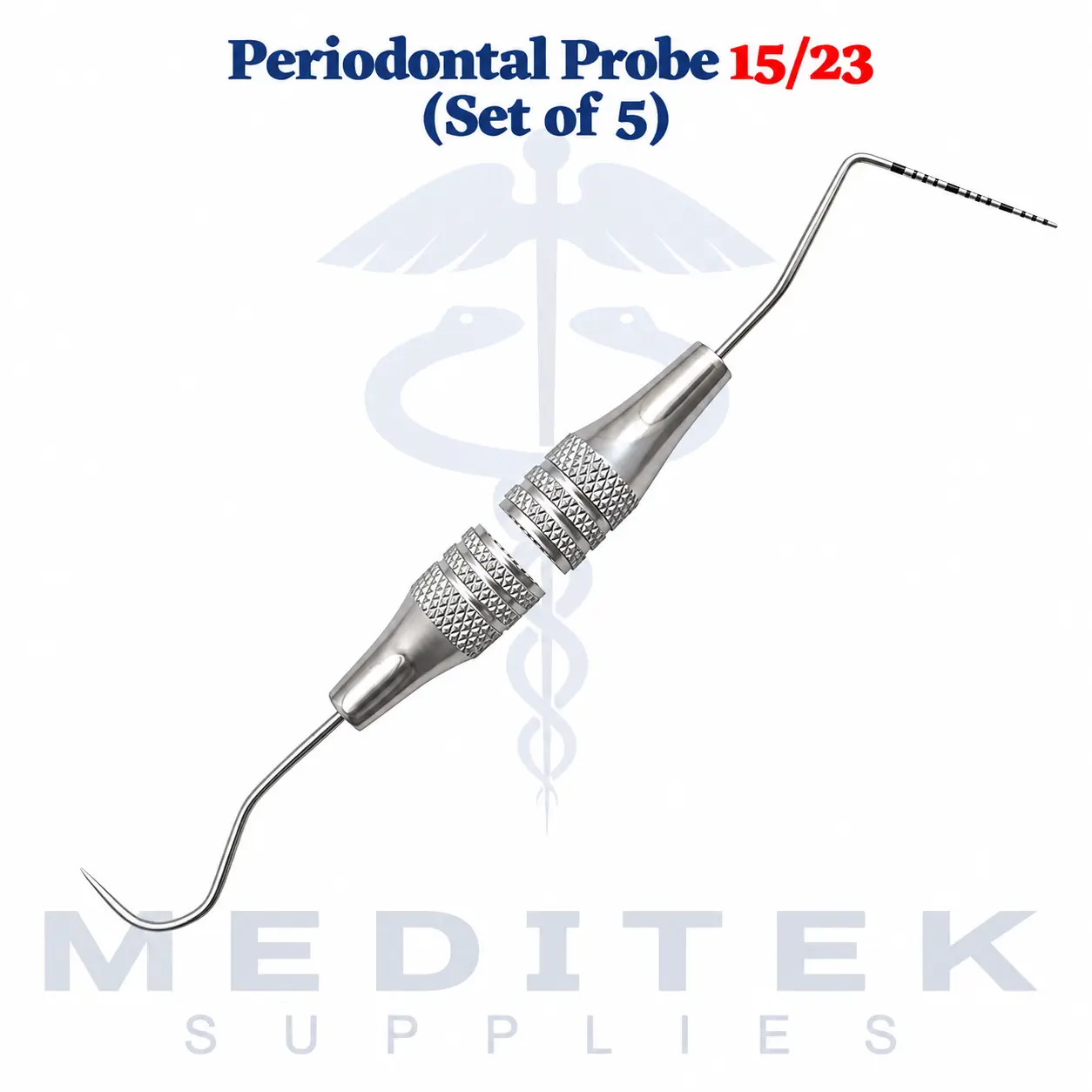
Premium 5-piece double-ended diagnostic set combining the UNC15 Periodontal Probe and #23 Shepherd’s Hook Explorer. Features highly accurate, chip-resistant color-coded markings (1mm to 15mm) and an ultra-lightweight, ergonomic hollow handle to reduce hand fatigue during routine charting. Forged from high-grade, fully autoclavable surgical stainless steel.
100 in stock (can be backordered)
| Title | Qty | After Discount Price |
|---|---|---|
| Buy 2 Get 5% Discount | 2 | $52.24 |
| Buy 3 Get 8% Discount | 3 | $50.59 |
| Buy 4 Get 10% Discount | 4 + | $49.49 |
UNC 15/23 Color-Coded Perio Probes for Fast, Accurate Charting
Pocket charting and caries checks happen at almost every hygiene visit. This 5-piece set puts both tools on one instrument. Each double-ended piece pairs a UNC 15 periodontal probe with a #23 Shepherd’s Hook explorer, so you can measure pockets and check tooth surfaces without going back to the tray.
What You Get in This Periodontal Probe Set
- Quantity: 5 double-ended diagnostic instruments
- Working ends: UNC 15 probe on one end, #23 explorer on the other
- Handle: Lightweight hollow handle with a cross-knurled grip
- Material: Surgical-grade stainless steel with a satin finish
- Reuse: Fully reusable and autoclavable
UNC 15 Probe End: Clear Readings From 1 to 15 mm
The UNC 15 is one of the most widely used probe patterns for full-mouth periodontal charting. It is named after the University of North Carolina and has a mark at every millimeter from 1 to 15 mm. With no skipped numbers, you can record a 4 mm or 6 mm reading exactly instead of guessing between marks.
How the Color-Coded Bands Work
On a UNC 15 probe, dark color bands cover 4 to 5 mm, 9 to 10 mm, and 14 to 15 mm. The edges of these bands give you instant reference points at 5, 10, and 15 mm. This speeds up charting and cuts down on reading errors.
The full 15 mm length also covers deep pockets and attachment loss readings that a 10 mm or 12 mm probe cannot reach.
UNC 15 vs Other Periodontal Probes
- Williams probe: Marks at 1, 2, 3, 5, 7, 8, 9, and 10 mm. There are no marks at 4 and 6 mm.
- Marquis probe: Bands in 3 mm steps. Faster to read but less exact.
- WHO probe: Ball tip with a color band. Mostly used for quick periodontal screening.
- UNC 15 probe: Every millimeter up to 15 mm. Best for detailed charting and tracking changes over time.
#23 Shepherd’s Hook Dental Explorer End
The #23 explorer has a curved hook shape and a fine, sharp tip. The thin tip sends small vibrations back to your fingers, so you can feel rough spots and changes in the tooth surface. It works well for:
- Checking pits and fissures for soft or sticky areas
- Testing the edges of fillings and crowns
- Finding calculus above and just below the gum line
Clinical tip: The #23 is built for surface and margin checks. For deep calculus in back pockets, an 11/12 explorer reaches better. Many clinicians keep both on their trays.
Lightweight Hollow Handle for Long Charting Sessions
A full-mouth chart takes six readings per tooth. On a complete adult set of 32 teeth, that adds up to 192 probe insertions for one patient. The hollow handle keeps each instrument light, so your hand does less work with every stroke.
The cross-knurled pattern gives a firm hold even with wet gloves. A secure grip makes it easier to keep the light, steady pressure that accurate probing needs.
Surgical Stainless Steel Built for Daily Use
Each probe and explorer is made from corrosion-resistant surgical-grade stainless steel. The satin finish cuts glare from operatory lights, so the color bands stay easy to read. The steel holds up to repeated ultrasonic cleaning and autoclave cycles without rusting or pitting.
Care and Sterilization Tips
- Clean instruments soon after use so debris does not dry on the tips.
- Use an ultrasonic cleaner or instrument washer before sterilizing.
- Dry fully before packing to prevent water spots and staining.
- Avoid bleach and other chloride solutions, which can pit stainless steel.
Who Needs This Perio Probe and Explorer Set
- Dental hygienists doing routine perio charting and recall exams
- General dentists handling new patient and comprehensive exams
- Periodontists tracking pocket depth before and after treatment
- Dental students building a reliable diagnostic kit
Once charting shows calculus or deep pockets, the next step is debridement. Pair this set with our dental scalers and curettes to cover the full hygiene appointment, from assessment to treatment.
Technical Specifications
- Pack quantity: 5 double-ended instruments
- Probe pattern: UNC 15, marked every 1 mm from 1 to 15 mm
- Color bands: 4 to 5 mm, 9 to 10 mm, 14 to 15 mm
- Explorer: #23 Shepherd’s Hook
- Handle: Lightweight hollow metal, cross-knurled
- Material: Surgical-grade stainless steel, satin finish
- Reprocessing: Reusable, ultrasonic safe, autoclavable
Frequently Asked Questions About UNC 15/23 Perio Probes
What is a UNC 15 periodontal probe used for?
It measures the depth of the gum pocket around each tooth. The readings help track gum health, find periodontal disease, and check how well treatment is working.
What pocket depth readings are considered healthy?
A healthy sulcus usually measures 1 to 3 mm. Readings of 4 mm or more often point to a periodontal pocket and need a closer look, along with bleeding and attachment level.
How much pressure should I use when probing?
Use light pressure of about 20 to 25 grams. Too much force pushes the tip past the base of the pocket and gives a falsely deep reading.
What is the difference between a #23 explorer and an 11/12 explorer?
The #23 Shepherd’s Hook is best for checking pits, fissures, and restoration margins. The 11/12 has a longer angled shank that reaches deep subgingival areas on back teeth more easily.
Can these perio probes go in the autoclave?
Yes. All five instruments are made from surgical stainless steel and are fully autoclavable. Clean and dry them first.
Why buy a 5-piece periodontal probe set instead of one?
A set lets you keep clean instruments ready while others go through sterilization. It also gives you spares if a tip gets bent or dull.
Looking for more diagnostic and surgical tools? Browse our full range of dental instruments or explore more scalers and curettes for your practice.
Related products
-
 In Stock0
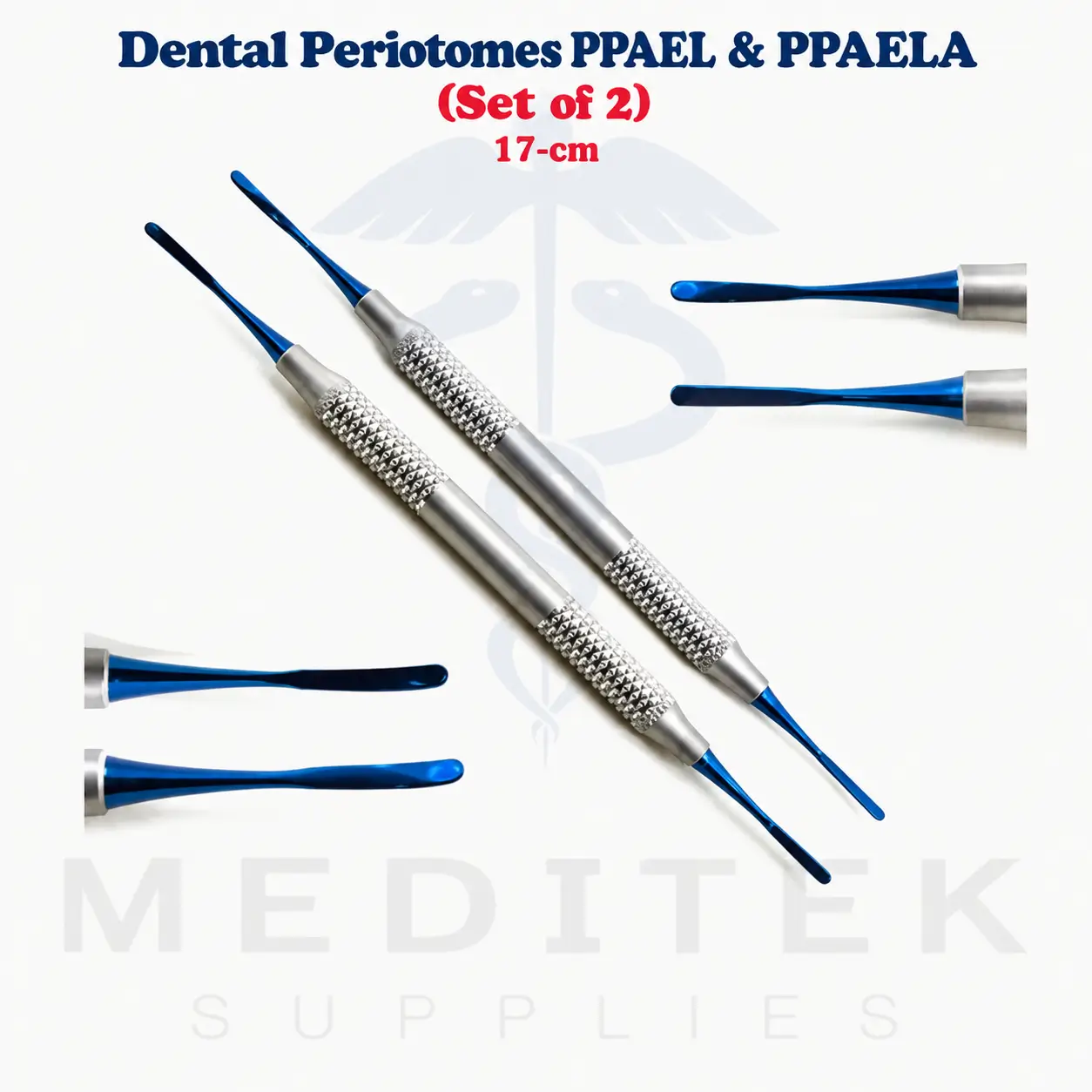
Dental Periotomes PPAEL & PPAELA
$23.99
9 in stock
Title Qty After Discount Price Buy 2 Get 5% Discount 2 $22.79 Buy 3 Get 8% Discount 3 $22.07 Buy 4 Get 10% Discount 4 + $21.59 -
 In Stock0
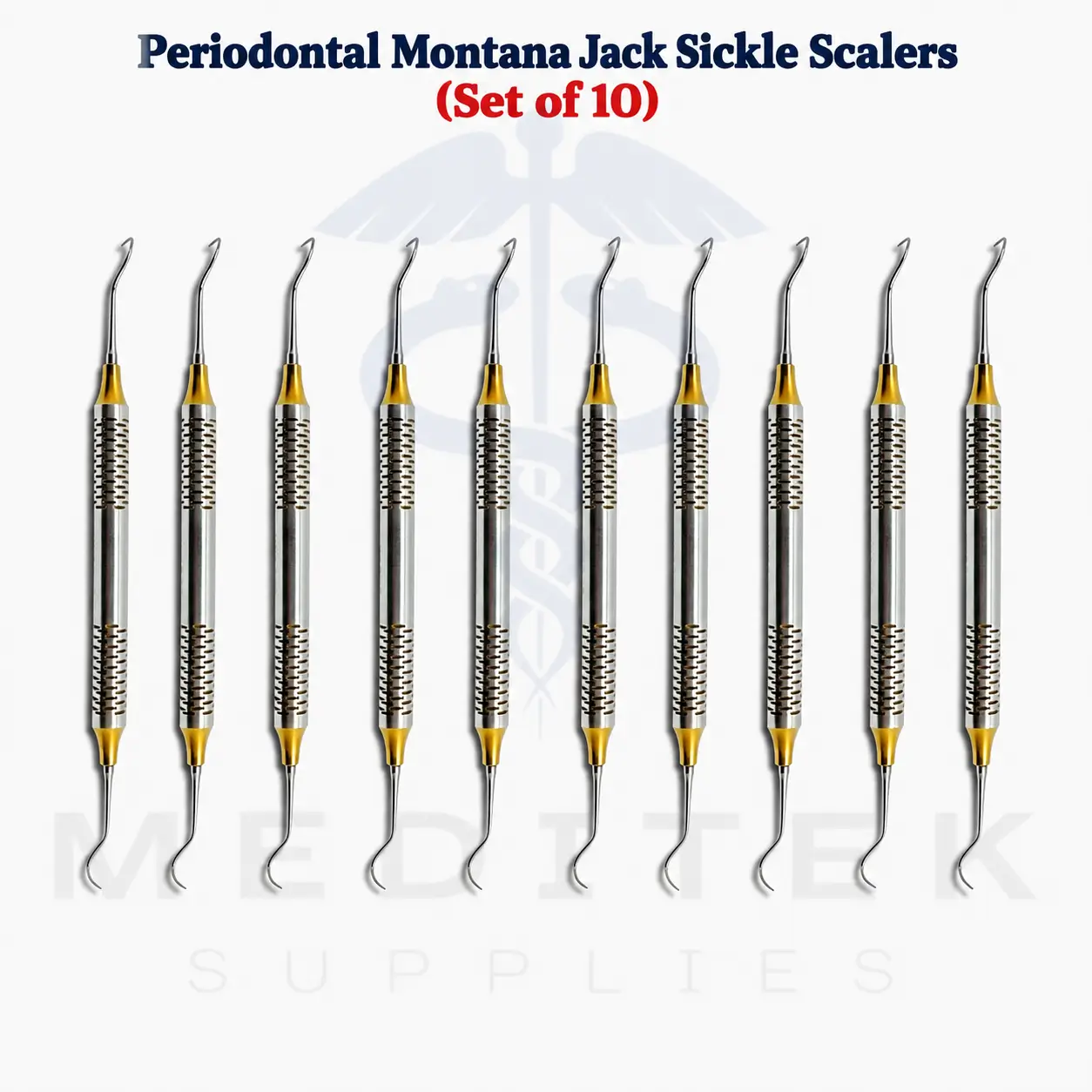
Montana Jack Sickle Scaler Light Double Ended 10X Periodontal Dental Instruments
$164.99
99 in stock (can be backordered)
Title Qty After Discount Price Buy 2 Get 5% Discount 2 $156.74 Buy 3 Get 8% Discount 3 $151.79 Buy 4 Get 10% Discount 4 + $148.49 -
 In Stock0
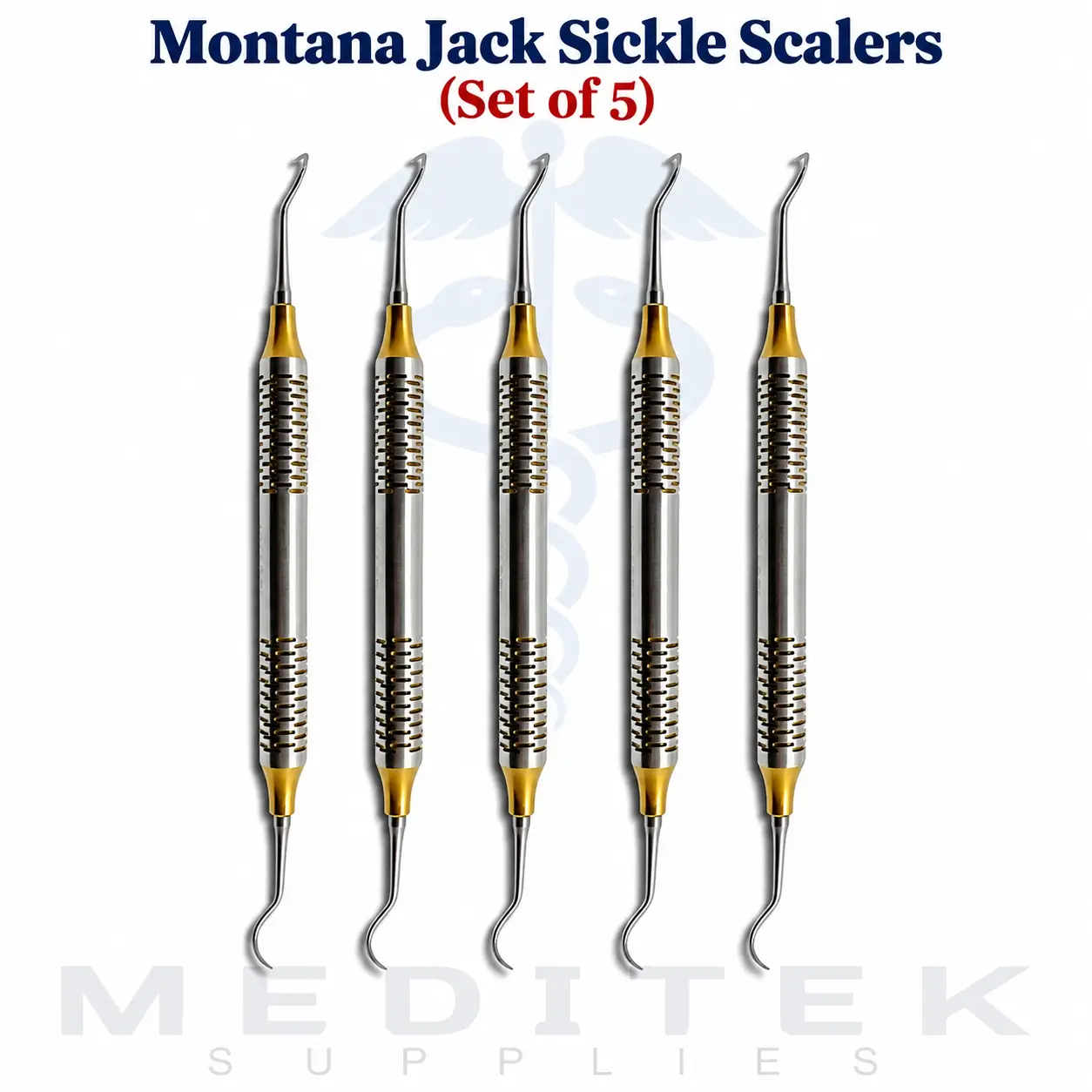
5 X Periodontal Montana Jack Sickle Scaler Light Double Ended Dental Instruments
$84.99
149 in stock (can be backordered)
Title Qty After Discount Price Buy 2 Get 5% Discount 2 $80.74 Buy 3 Get 8% Discount 3 $78.19 Buy 4 Get 10% Discount 4 + $76.49

 Home
 Shop
 About
 Contact